Imagine the ground beneath your project isn’t solid earth but a complicated, crowded highway of vital, buried infrastructure: high-pressure gas lines, fiber optic cables, massive water mains, and high-voltage conduits. In the construction and utility world, discovering the exact position of these hidden assets is the single most important step for project safety and financial health. Relying on outdated maps or general markings can lead to catastrophic mistakes that halt progress and cost fortunes in repairs and fines. This is where modern, non-destructive vacuum excavation services step in, providing a method that ensures precision, protection, and verifiable data before the first trench is dug.
The Nightmare of the Dig and Why It Had to End
Before the revolution of air and hydro techniques, conventional excavation methods were the rule. These methods involved mechanical digging with backhoes or even painstaking hand digging with shovels and picks near suspected utility locations. While hand tools offered some control, they were notoriously slow and exhausting for workers, and they absolutely did not eliminate the risk of utility strikes. When a backhoe’s metal tooth snagged an unmarked power line or punctured a gas pipe, the results were not only damaging to the utility, but terrifying for the crew and the surrounding community, sometimes resulting in serious injury or tragic loss of life. The old way of operating treated the subsurface like a guessing game, a kind of necessary evil in construction. We knew there had to be a safer, smarter, and faster path forward for the industry, one that respects the incredible complexity of our underground systems.
What is Non-Destructive Vacuum Excavation Services
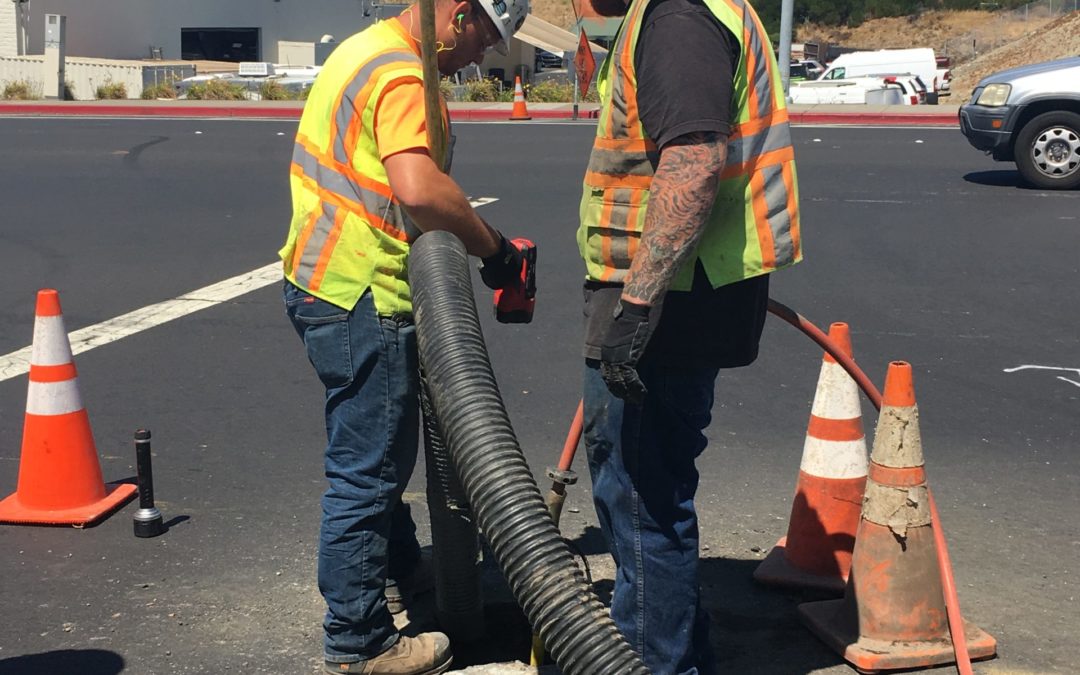
The innovation of vacuum excavation services completely changed the way we approach subsurface work, trading destructive force for controlled precision. Commonly known as potholing or soft digging, the technique uses a highly pressurized stream of air or water to gently break up the surrounding soil and aggregate, which is then immediately extracted using a powerful vacuum system into a debris tank. This process creates a small, surgical hole or slot trench that exposes the utility without ever physically touching it with a sharp metal edge. The resulting excavation is less invasive than traditional digging, often requiring holes as small as eight to ten inches in diameter to positively identify a service, which makes restoration much easier later on. Since the loosened material is vacuumed up immediately, the process allows work crews to stay safe and on the surface while simultaneously reducing the risk of trench cave-ins, which is a major benefit over traditional trenching methods. This is the method we rely on to deliver the verifiable Level A data our clients need.
Air Versus Hydro Vacuum Excavation
We understand that every job site presents its own unique ground composition and access restraints, which is why we offer two powerful versions of vacuum excavation services: air and hydro. We approach each project with the expertise to recommend the right machine for the job.
Hydro excavation employs high-pressure water to liquefy the soil, creating a slurry that is quickly sucked into the debris tank. This method is incredibly fast and highly efficient at digging deeper or cutting through harder, more compacted ground, making it the better choice for large test hole projects or situations where deep access is required. A consideration when using hydro is that the excavated material is essentially mud and usually cannot be reused for immediate backfill; it must be hauled away for disposal, sometimes off-site.
Conversely, air excavation uses compressed air to loosen the soil, which is then vacuumed up. A great advantage of using air is that the excavated soil remains relatively dry and can often be reused immediately as backfill once the test hole is completed, which drastically cuts down on disposal fees and the need to import replacement material. Although air may be slower in extremely dense or rocky soil, it creates less mess and is generally ideal for smaller-scale potholing projects, especially when reusing materials is a priority. Regardless of whether we use air or water, our non-destructive approach remains the central tenet, ensuring that every buried line is treated with respect.
Why Level A Data Demands Vacuum Excavation Services
In the world of Subsurface Utility Engineering (S.U.E.), data quality is everything, and the highest standard is called Quality Level A (QLA). Other methods, like Ground Penetrating Radar (GPR) or electromagnetic locating, are crucial for identifying the approximate path of a utility (Quality Level B or C), which helps us narrow down the area of interest. However, no amount of technology can replace visual confirmation.
QLA data is only achieved by physically exposing the utility, confirming its exact horizontal and vertical location, size, and material composition. This visual exposure, or “daylighting,” is performed precisely through vacuum excavation services. By creating that small, controlled opening, we remove all guesswork, recording the precise coordinates that design engineers and contractors rely on for final planning. This certainty is not merely about preventing a strike; it’s about providing the absolute assurance that a proposed trench, a new foundation, or a boring path will proceed without interference, saving you countless hours of delay and hundreds of thousands of dollars in rerouting or damage control. When the integrity of your entire project hangs in the balance, Level A data is a requirement, not a suggestion.
Applications Where Vacuum Excavation Services Shine
The applications of non-destructive digging extend far beyond simple utility locating, supporting a wide range of critical infrastructure and construction activities. The core benefit is always the combination of high-precision work with minimal risk and site disturbance.
-
- Utility Potholing: This is the most common use, involving digging test holes to confirm the exact location of existing utilities before any major excavation begins.
- Slot Trenching: In heavily congested areas where many utilities run close together, a long, narrow trench can be dug to expose a multitude of services simultaneously, allowing us to accurately map complex utility corridors.
- Excavating in Tight Spaces: Our compact rigs and hoses allow us to excavate in areas that are completely inaccessible to traditional heavy machinery like backhoes, such as inside buildings, under bridges, or in narrow alleyways.
- Environmental Monitoring Well Installation: When installing monitoring wells, it is vital to disturb the soil as little as possible to maintain the integrity of environmental samples, and vacuum excavation services are ideal for this precise work.
- Cathodic Protection Installation: This process, which helps protect pipelines from corrosion, requires digging small, precise holes near the pipe for installation, a perfect task for non-destructive hydro or air techniques.
- Emergency Response: In the event of an underground utility leak or failure, rapid, safe exposure is mandatory, and vacuum excavation services allow for quick access to the damaged line without causing further damage to adjacent services.
Local Know-How in the San Francisco Bay Area
We are specialists in the field, and our experience dates all the way back to 1984; we used to operate under the name Subtronic. Our history has given us deep, practical knowledge of the intricate web of pipelines and cables that runs beneath the San Francisco Bay Area, which is our confirmed primary location. Working here means navigating infrastructure that is often decades old, poorly documented, and layered one on top of the other, like an archaeological dig site composed of wires and pipes. We understand the specific soil types, the congested urban density of cities like San Francisco, San Jose, and Oakland, and the regulatory environment that governs subsurface work in this region. This local expertise allows us to mobilize quickly and execute vacuum excavation services efficiently, delivering timely, reliable results that keep local projects on track. We are committed to serving our region, ensuring that the infrastructure we rely on every day is built and maintained with the utmost precision.
The Comprehensive Value of Our Services
We pride ourselves on offering comprehensive Subsurface Utility Engineering (S.U.E.) services that integrate seamlessly with our non-destructive digging capabilities. When you engage us, you’re not just getting a vacuum truck; you’re partnering with a team that manages the entire utility risk profile from initial desktop review to final, verified data delivery. We use GPR surveys to see deep into the earth and locate metallic and non-metallic objects. For concrete surfaces, GPR concrete scanning is essential to find rebar and conduits before core drilling or cutting, minimizing structural damage and risk. All of these preliminary steps lead us to the most crucial point: physically exposing the utility with vacuum excavation services to achieve that gold standard QLA data. Our array of services also includes specialized tasks like CCTV pipe inspection and pipe cleaning, which utilize hydro jetting to restore drainage systems to optimal performance. You can find a complete list of our specialized services right on our website.
The Integrity of Surface Restoration
When we are called onto a site, the goal is always to leave it looking as close to untouched as possible, a core element of truly non-destructive vacuum excavation services. Once the utility has been exposed, the required measurements are taken, and the data is recorded, the test hole is backfilled immediately. When we use air excavation, the dry, excavated soil is often stored temporarily in the truck’s tank and then compacted back into the hole for restoration. This quick, on-site material reuse saves time and disposal costs.
When the work involves asphalt or concrete, we approach the initial surface removal with caution. Standard practice often involves methods like core drilling or saw cutting to remove a small, clean section of the pavement before the excavation begins, minimizing surface disruption. Coring is particularly effective, removing the material cleanly and allowing for a precise and contained surface repair once the backfilling is complete. Our meticulous approach to restoration means that project owners and general contractors can move on quickly to the next phase of work without worrying about large, messy patchwork repairs.
Partnering for Long-Term Success with Vacuum Excavation Services
For more than 40 years, we have been working as partners with civil engineers, contractors, and project owners, helping them achieve more by delivering results that empower their work. We take pride in our history; being formerly known as Subtronic, we have a long legacy of technical leadership and professional integrity that continues under the Level A banner. We believe that the best work is built on certainty, and that certainty comes from having precise, verifiable Level A data. By investing in our highly accurate vacuum excavation services today, you are fundamentally de-risking your entire infrastructure project, protecting budgets, timelines, and personnel. We remove the anxiety of the unknown, ensuring that when the heavy machinery moves in, everyone knows exactly what lies beneath their feet. We are here to bring that sense of calm and control to your most complex projects.
Secure Your Project Foundation
Is your next big project dependent on outdated utility maps and a prayer? Stop gambling with your budget and reputation. Level A Underground Solutions is ready to provide the certified Level A data you need for complete project confidence.
We invite you to reach out to our team of experts and contact us today to discuss your next subsurface challenge.